OUR SERVICES
Commercial Leak Detection
Fast, non-destructive water leak location for commercial, municipal and industrial sites. Pinpoint the leak before you excavate.
SERVICE OVERVIEW
Commercial Leak Detection
Absolute GPR finds hidden water leaks quickly and non-destructively, so you repair the exact spot instead of digging up a whole yard to chase a wet patch.
Using acoustic leak detection, correlation techniques and pressure and flow data, we pinpoint leaks on commercial, municipal and industrial water networks — reducing water loss, protecting your infrastructure and slashing the cost and disruption of repairs.
Why It Matters
The True Cost of a Hidden Leak
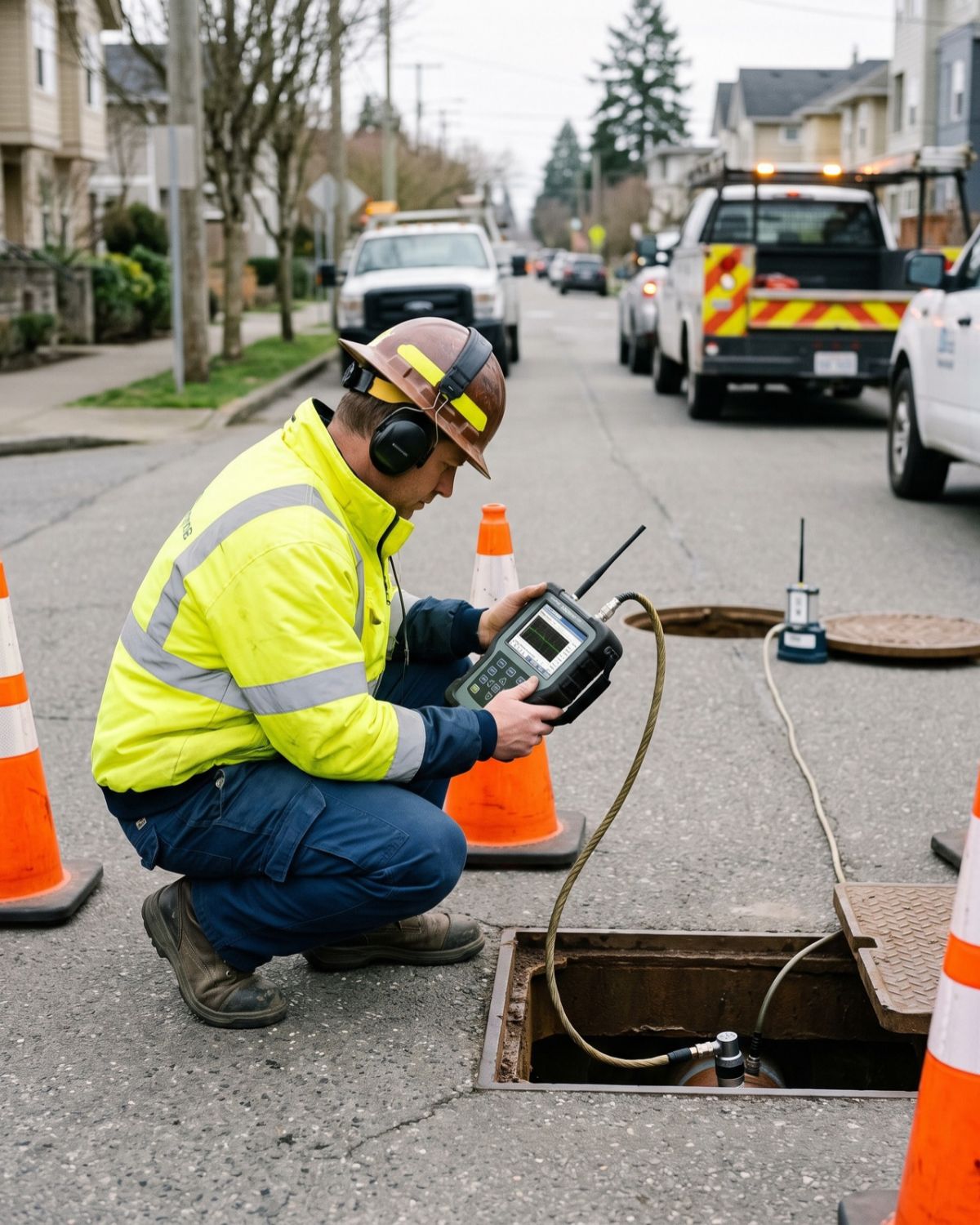
An underground leak wastes water and money every hour it runs. Finding it precisely — rather than excavating on a hunch — is the difference between a targeted repair and an expensive, disruptive dig.
Continuous Water Loss
Every hour the leak runs, water — and the revenue or cost attached to it — is lost. On large networks the volume adds up fast.
Pressure Loss Across the Network
Leaks undermine pressure for every property on the network — reducing service levels and masking demand calculations.
Foundation & Pavement Damage
Water migrating through the ground erodes foundations, destabilises pavements and causes subsidence that’s costly to remediate.
Non-Revenue Water
On municipal and estate networks, unfound leakage is a major driver of NRW — water that’s treated and pumped but never billed or accounted for.
THE COST OF WAITING
LEAK SCALE: WATER LOSS OVER TIME
Even a small undetected leak wastes thousands of litres every day. The large the leak, the greater the urgency.
| Leak Diameter | Water Loss / Hour | Water Loss / Day | Annual Water Loss |
|---|---|---|---|
| 1mm 1 mm | ≈ 42 Litres | ≈ 1,008 Litres | ≈ 368 m³ |
| 2mm 2 mm | ≈ 168 Litres | ≈ 4,032 Litres | ≈ 1,471 m³ |
| 3mm 3 mm | ≈ 378 Litres | ≈ 9,072 Litres | ≈ 3,311 m³ |
| 4mm 4 mm | ≈ 672 Litres | ≈ 16,128 Litres | ≈ 5,886 m³ |
The Technology
How Non-Destructive Leak Detection Works
Visual Inspection & Site Assessment
- The Process: Walk the pipeline route and inspect accessible points such as manholes, valve boxes, meters, and ground surfaces for physical indicators like damp soil, lush vegetation patches, erosion, pooling water, or meter movement when valves are closed.
- Purpose: Narrows down the general zone of interest before deploying specialized acoustic or electronic equipment.
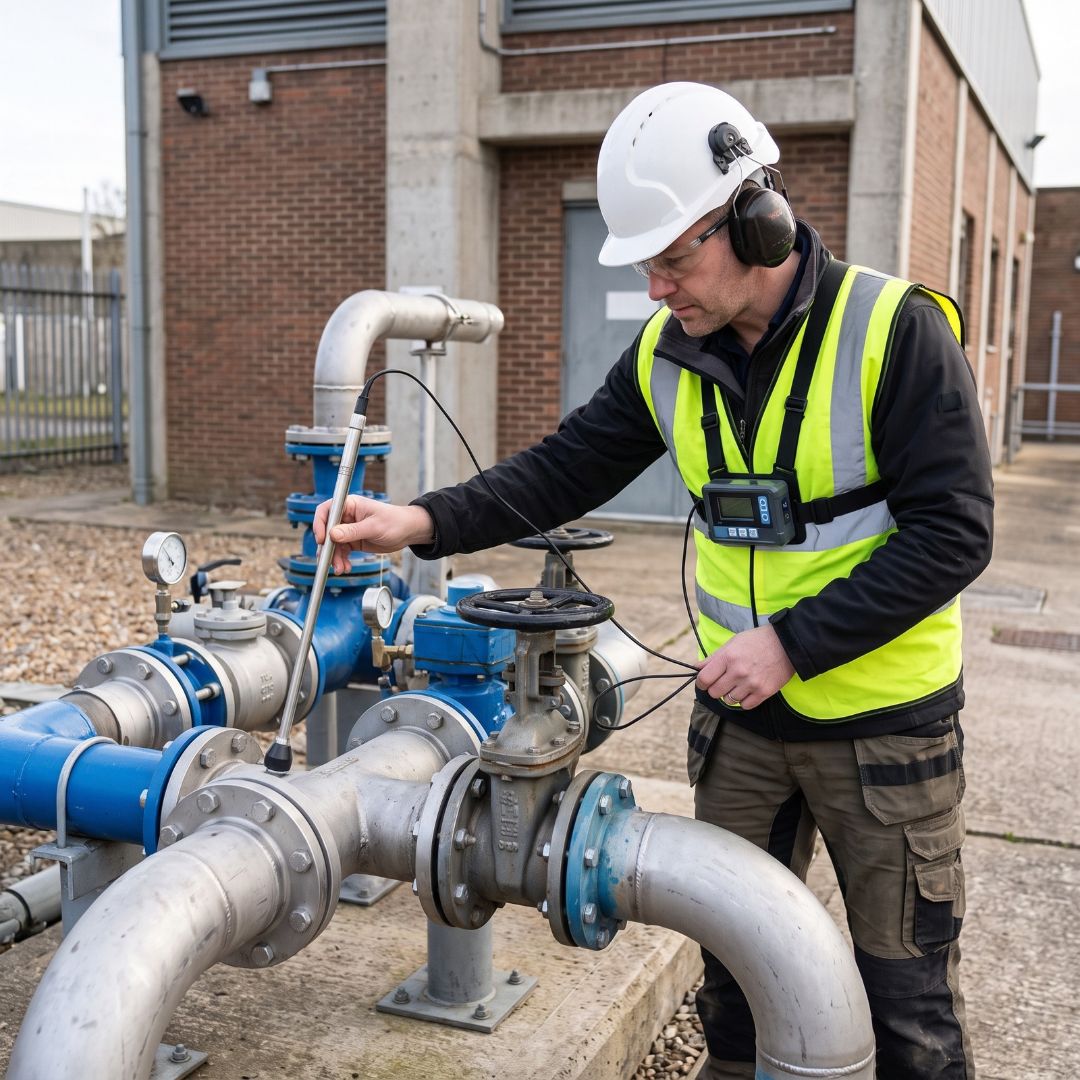
Acoustic Listening Stick (Initial Screening)
- The Process: Place a mechanical listening rod or electronic listening stick directly onto contact points (valves, hydrants, meters, or exposed pipe sections) along the network.
- Purpose: Amplifies structure-borne sound frequencies to quickly determine whether a leak noise is present on a specific section of the line, helping isolate the anomaly between two access points.
Acoustic Correlation (Zone Isolation)
- The Process: Mount electronic acoustic sensors (transducers/microphones) on contact points on either side of the suspected leak zone. The correlator measures the exact time it takes for the leak sound to travel through the pipe wall to each sensor.
- Purpose: By factoring in pipe material, diameter, and distance, the software calculates the precise distance of the leak from each sensor, narrowing the target area down to within a meter.
Ground Microphone / Pinpointing (Exact Location)
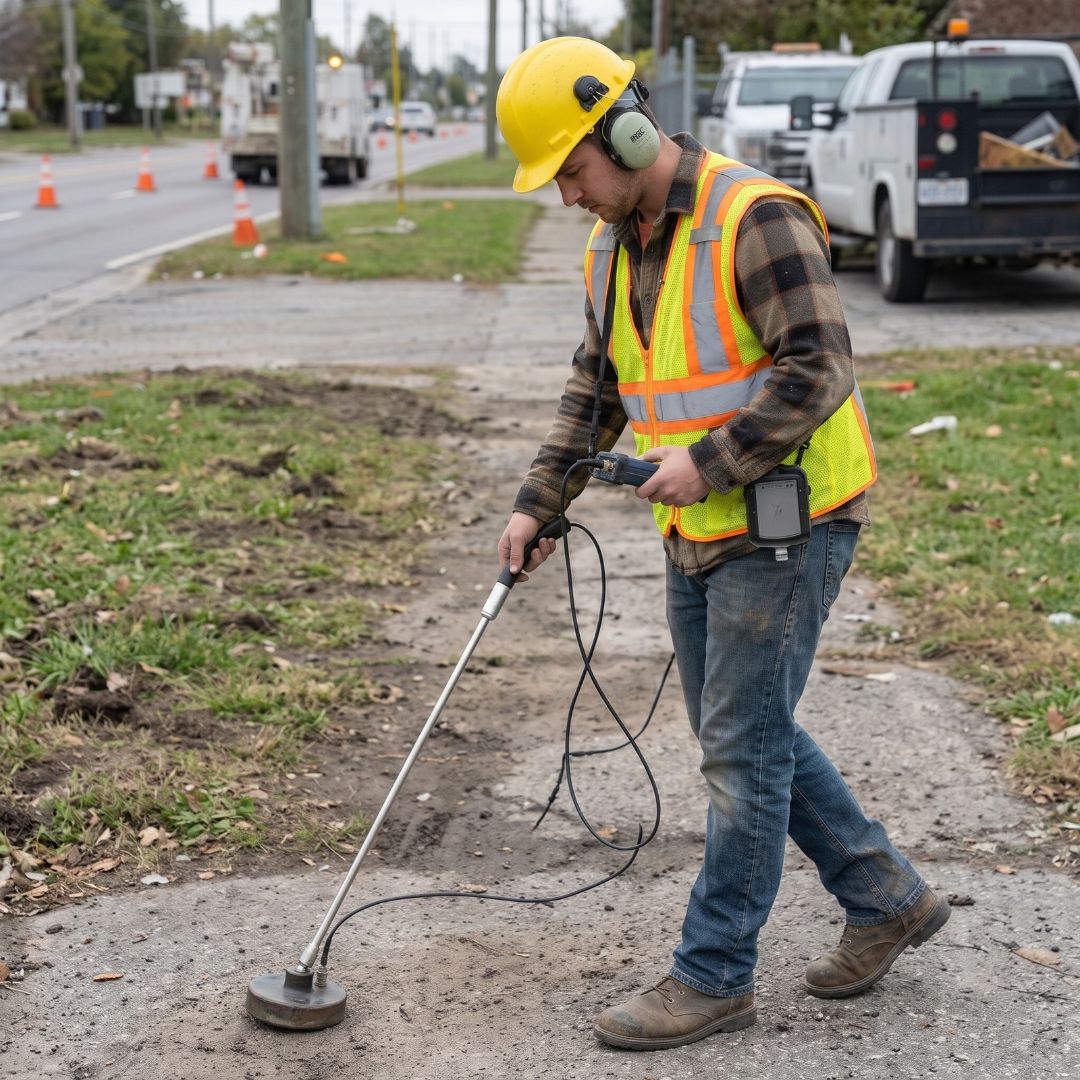
- The Process: Use a ground microphone (listening disc or tripod base) to grid-scan directly over the path of the pipe within the correlated zone. Operators listen for the peak sound intensity where the escaping water jet impacts the surrounding soil or pavement.
- Purpose: Pinpoints the exact structural spot on the surface directly above the leak, minimizing unnecessary excavation or concrete cutting.
Excavation & Repair
- The Process: Mark out the pinpointed spot, safely excavate or core through the surface material (applying concrete scanning or GPR where underground utilities cross), and expose the pipeline.
- Purpose: Apply the appropriate repair clamp, sleeve, weld, or pipe replacement section to permanently seal the breach and restore system pressure.
Where We Work
Where We Detect Leaks
Commercial & Industrial Properties
Factories, warehouses, complexes and estates — locating leaks on private water infrastructure quickly and without surface damage.
Municipal Reticulation & Bulk Mains
Reducing non-revenue water across distribution networks — from reticulation pipes to large-diameter bulk transmission mains.
Estates, Complexes & Body Corporates
Isolating losses across shared infrastructure where the leak may fall in a common area and ownership is unclear.
Underground & Concealed Pipework
Leaks hidden beneath slabs, paving, landscaping and floor screed — located precisely without lifting the full surface.
Step by Step
Our Leak Detection Process
A systematic four-step approach that moves from wide area to precise point — efficiently and without unnecessary excavation.
01
Assess
Review the site, the network layout and the symptoms — high consumption, wet areas, pressure drops — to understand the likely zone and pipe type.
02
Localise
Use pressure and flow logging to confirm a leak exists and narrow it down to a specific zone within the network before acoustic work begins.
03
Pinpoint
Apply acoustic listening and leak correlation to calculate the precise location of the leak along the line — accurate to within centimetres.
04
Report & Mark
Mark the leak location on the surface and issue a report with findings so the repair team can excavate at exactly the right point first time.
Service Areas
Serving Your Area
Absolute GPR provides leak detection across South Africa and internationally on a project basis.
Cape Town
Acoustic and correlation leak location across the Cape Town metro — from residential estates to municipal bulk mains.
Johannesburg
Commercial and municipal leak detection on the Reef — large complexes, industrial sites and reticulation networks.
Durban
Coastal and industrial network leak location — including corrosion-prone infrastructure in high-humidity environments.
Pretoria
Leak detection for Tshwane properties and networks — municipal, commercial and residential water loss investigations.
Common Questions
Frequently Asked Questions
How much does leak detection cost?
It depends on the size and access of the site and the complexity of the network. Because every job is scoped individually, contact us with your site details and we'll provide a fast, accurate quote.
How does non-destructive leak detection work?
We listen for the sound a pressurised leak makes using acoustic equipment and leak correlators, and use pressure and flow data to narrow the search — locating the leak precisely before any digging takes place.
Can you find leaks under a slab or paving?
Yes. Acoustic detection and correlation are specifically designed to locate concealed leaks beneath slabs, paving and landscaping — without excavating the whole area to find a single point.
EXPLORE MORE
Related Services
Pressure & Flow Logging
Continuous data logging to confirm leakage, measure its scale and focus the acoustic investigation where it matters most.
Utility Locating & Mapping
Locate and map the buried pipe before acoustic detection — knowing where the pipe is makes pinpointing the leak faster and more accurate.
Stop Losing Water. Find the Leak Today.
Contact our team with your site details and we’ll scope the investigation, confirm the price and get a technician to you fast.