OUR SERVICES
Concrete Scanning
GPR concrete scanning to locate rebar, post-tension cables, conduits and voids before drilling, coring or cutting. Safe work starts with knowing what’s inside.
SERVICE OVERVIEW
Concrete Scanning
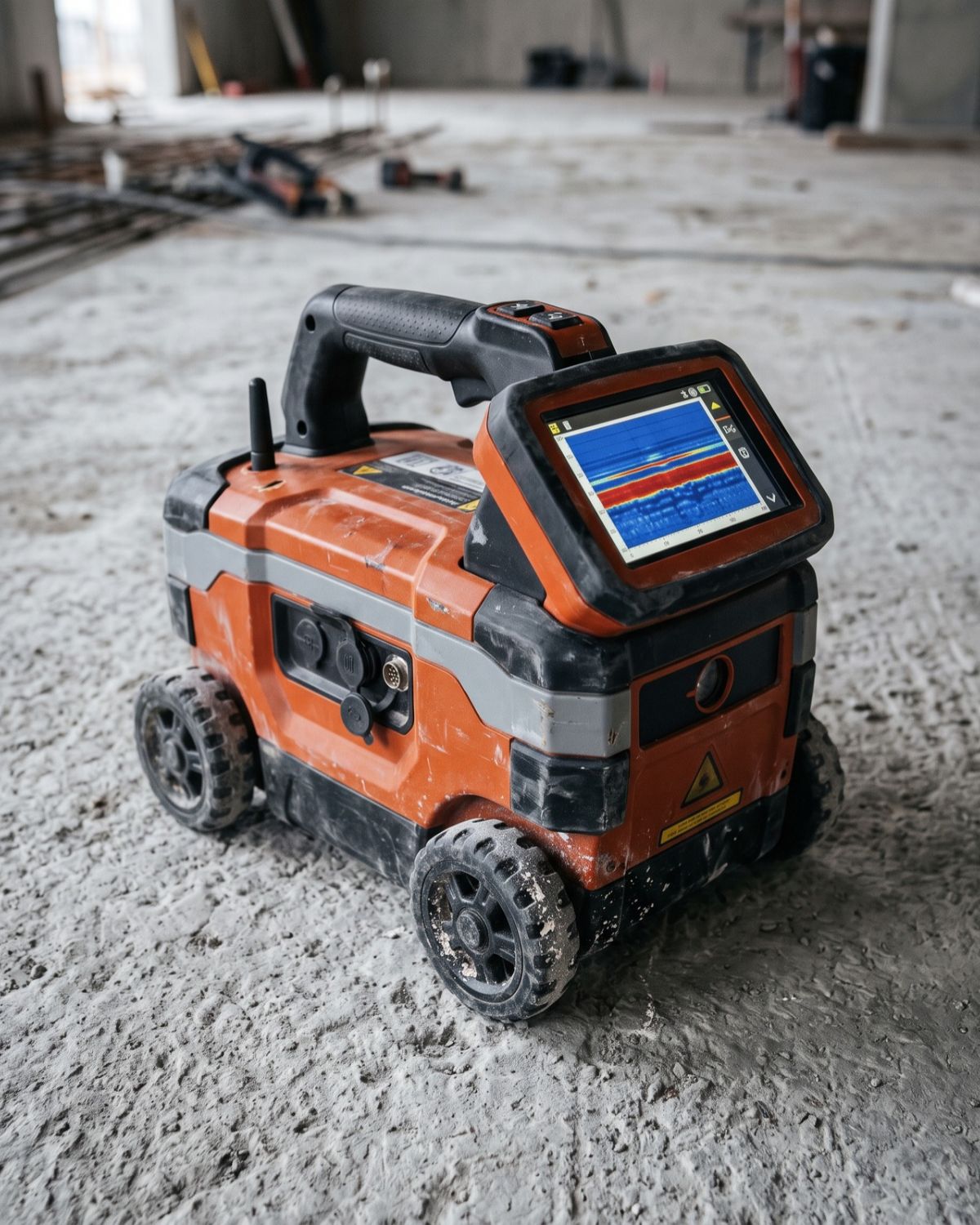
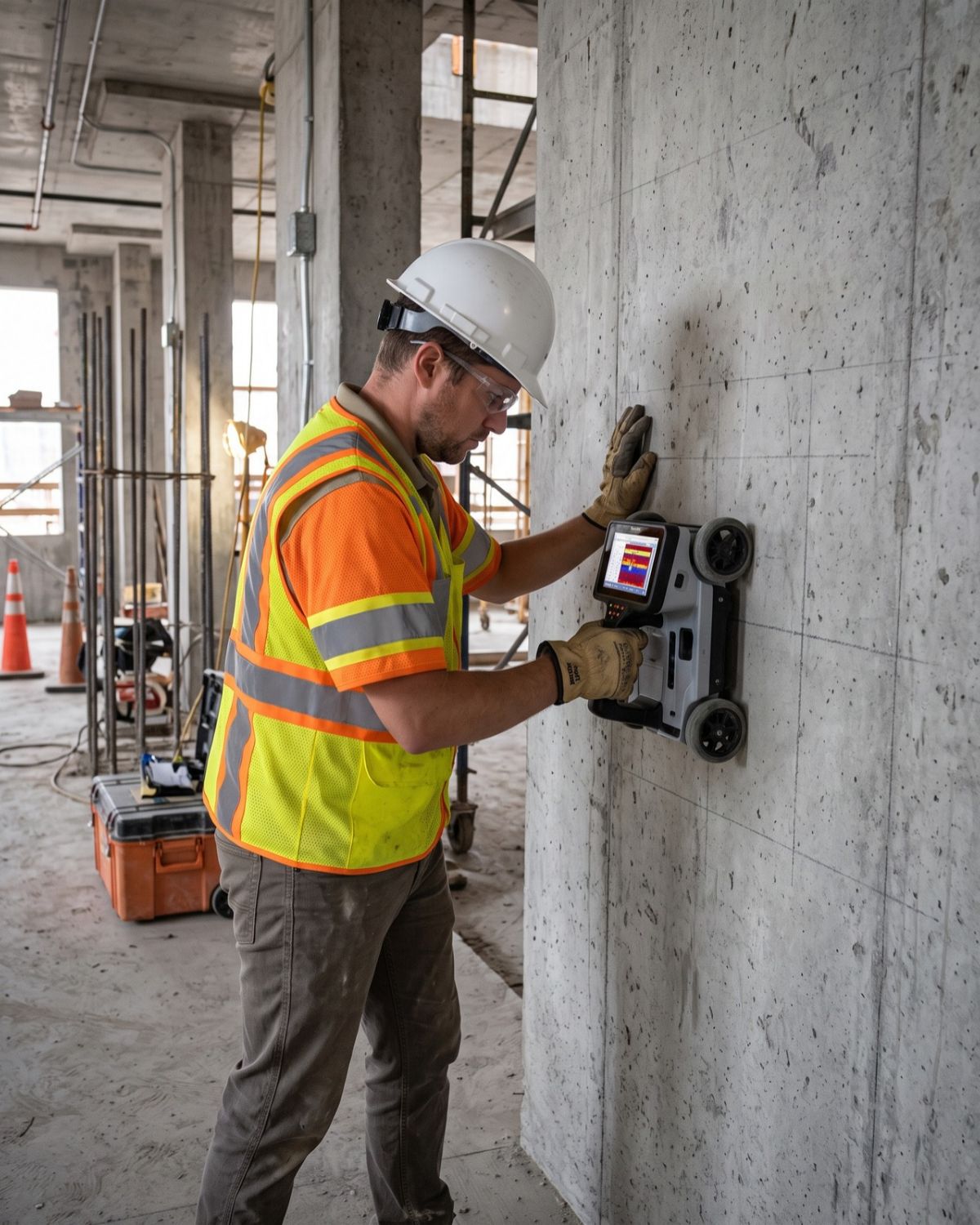
Concrete scanning is a non-destructive way to see inside a concrete structure before you drill, core, cut or demolish.
Using ground penetrating radar and complementary techniques, Absolute GPR identifies and maps what’s embedded in the slab, wall or column — so contractors, engineers and asset owners can work safely without striking structural steel or live services.
A few minutes of scanning routinely prevents damage that would cost far more to repair.
Why It Matters
Why Scan Before You Cut or Core?
Cutting into concrete blind is a gamble with expensive stakes. The consequences of hitting an embedded hazard go well beyond the cost of repairs — they reach into structural safety and the welfare of the people on site.
Cut a post-tension cable and you can compromise the structural integrity of an entire slab — a serious and immediate safety risk.
Hit a live electrical conduit and you risk injury, outage and significant liability.
Strike a water pipe and you flood the floor below and stop the project while repairs are made.
Concrete scanning removes the guesswork — we map the hazards, mark safe drilling zones and let the work proceed with confidence.
The Process
How Concrete Scanning Works
From first antenna pass to final surface marking — a systematic, repeatable process you can rely on.
01
Grid Scan
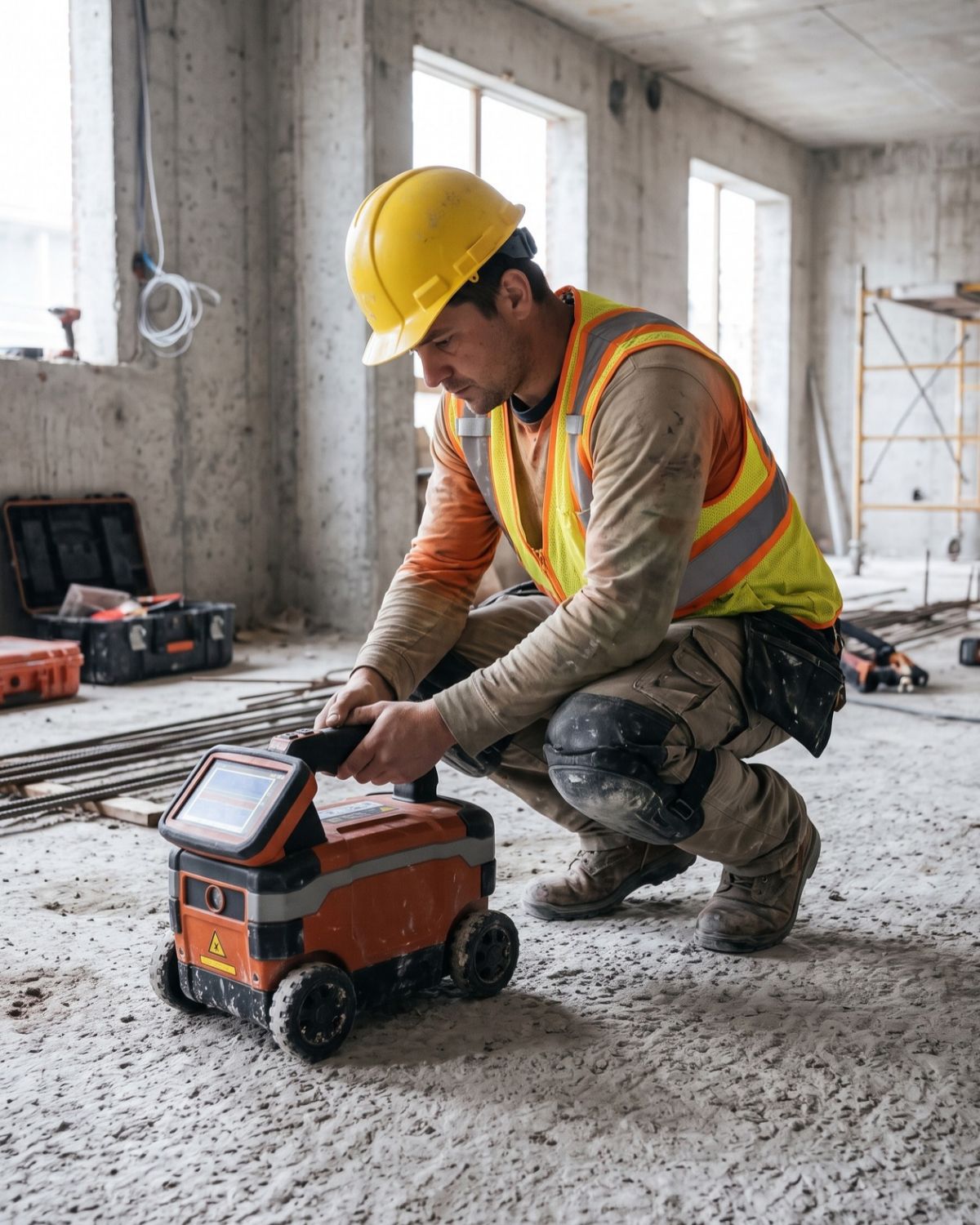
We move a high-frequency GPR antenna across the concrete surface in a controlled grid to achieve full coverage of the area to be worked on.
02
Real-Time Interpretation
Reflections from embedded objects — steel, plastic conduit, air gaps — are interpreted on site to locate each feature and estimate its depth.
03
Supplementary Methods
Where GPR alone can’t fully resolve the picture, we apply complementary techniques to raise confidence and confirm critical findings.
04
Surface Marking & Report
Embedded features are marked directly on the surface and a report is issued showing what was found, where, and at what depth — with clear safe drilling zones identified.
Detection Capability
What Concrete Scanning Detects
Detection capability varies with the depth, size, material and condition of the structure. Multiple scanning methods may be used to improve confidence. We will always tell you plainly what the scan can and cannot confirm on your specific structure.
- Reinforcing Steel (Rebar)
- Post-Tension Cables
- Electrical Conduits
- Water Pipes & Embedded Services
- Voids & Air Pockets
- Slab Thickness Variations
- Structural Beams & Columns
Applications
Where Concrete Scanning Is Used
Essential work for construction contractors, structural engineers, fit-out teams and facilities managers alike.
Core Drilling for New Services
Before drilling new penetrations for MEP services, conduits or fixings — confirm the drill path is clear of structural steel and embedded cables.
Cutting Openings in Slabs & Walls
Before cutting new doorways, service openings or expansion joints — map the reinforcement and post-tension layout first.
Anchoring & Fixing into Concrete
Before installing heavy anchors, brackets or structural fixings — locate rebar to avoid splitting the section or placing fixings incorrectly.
Demolition Planning
Before partial or full demolition — understand what’s structural and where embedded services run to sequence the work safely.
Structural Investigation
Investigating existing buildings for rebar corrosion, delamination, voids or construction defects as part of a condition survey or insurance assessment.
Refurbishment & Fit-Out
For fit-out contractors working in live buildings — scan before cutting, fixing or penetrating any concrete surface to protect the programme and the structure.
Common Questions
Frequently Asked Questions
What can ground penetrating radar detect in concrete?
Rebar, post-tension cables, electrical conduits, embedded pipes and services, and voids — essentially anything with a meaningful material contrast to the surrounding concrete. GPR also estimates slab thickness from the bottom reflection.
Why is scanning for post-tension cables so important?
Post-tension cables are under enormous tension. Cutting or coring through one can release that tension catastrophically, injure workers and compromise the load-bearing capacity of the slab. Scanning locates every cable so drilling and cutting can be planned safely around them.
How deep can concrete scanning see?
GPR can typically image the full depth of most slabs and identify objects embedded near both faces. The usable depth depends on the concrete mix, aggregate, moisture content and the antenna frequency selected — we match the antenna to the structure on every job.
Do you mark safe drilling points on site?
Yes. We mark the positions of all detected embedded objects directly on the concrete surface and clearly identify the safe zones for drilling or cutting. Your team leaves knowing exactly where they can and cannot work.
EXPLORE MORE
Related Services
Ground Penetrating Radar
The core technology behind concrete scanning — learn more about GPR and how it works across all our applications.
Utility Locating & Mapping
Locate underground services around and below the structure using GPR and electromagnetic locating.
Scan Before You Strike Something You Can't Undo
Talk to our team about your project — we’ll confirm scope, turnaround and what the scan will cover before you commit to anything.